
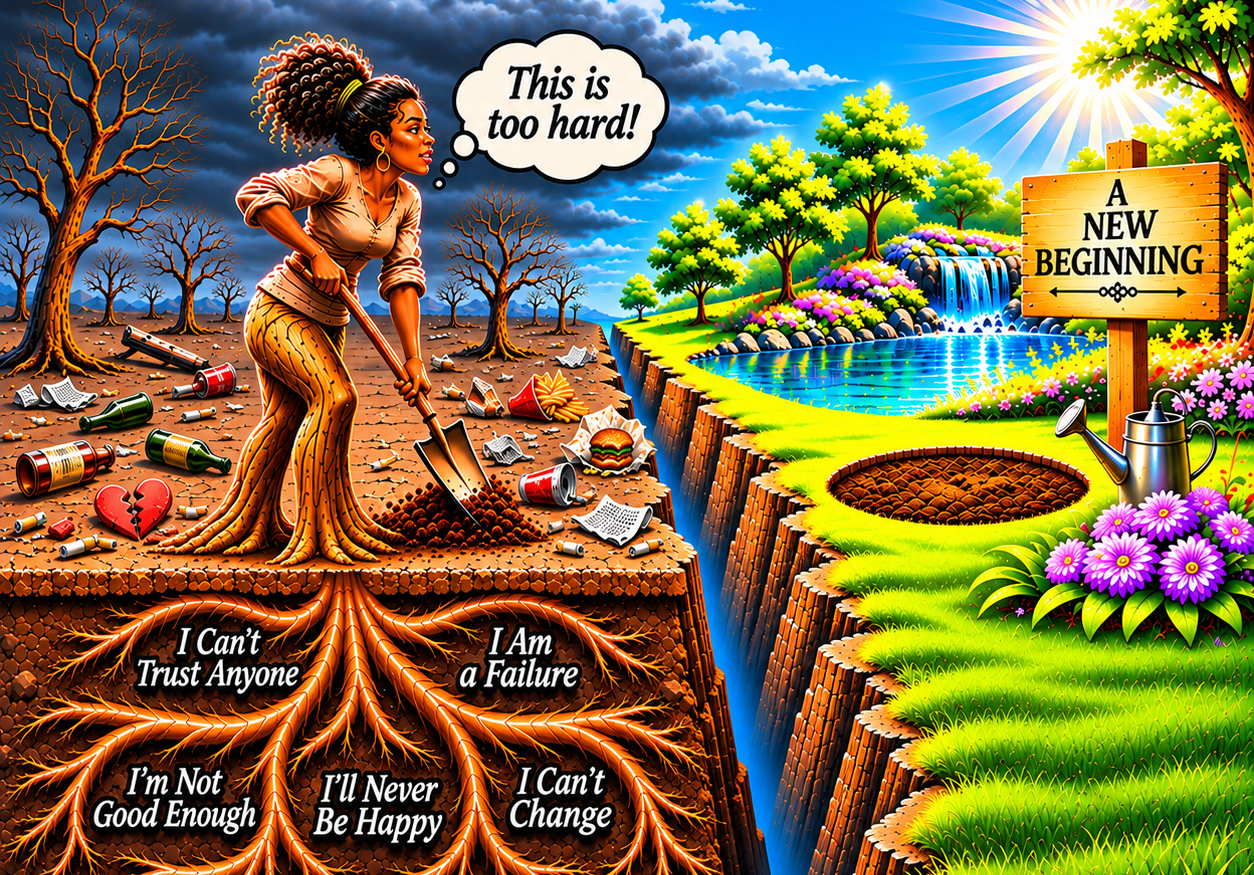
One of the biggest obstacles to personal growth, healing, and transformation is our resistance to change. The Bible says the path to truly discovering God is narrow and few find it and I think the majority of that reason is becasue people don’t want to change. It's something I see happening in people's personal lives, spiritual lives, relationships, and even in society as a whole on a very regular basis. Sadly, what I see most often are those who refuse to change despite their unhappiness, the feedback they get, the destruction they cause, and the situations around them. Then there are people who often recognize that something isn't working, that their circumstances aren't healthy, or that their behavior is contributing to their problems, yet struggle to change for all kinds of reasons.
Although change can be difficult for all of us, and some changes are certainly harder than others, we must recognize that growth often requires us to push beyond our comfort zones, confront uncomfortable truths, and persevere through the struggles that come with transformation. The process may not always be easy, but the rewards of becoming healthier, stronger, wiser, and better versions of ourselves are well worth the challenges we must overcome along the way.
Why We Resist Change
Have you ever noticed how frustrating it can be when something familiar suddenly changes?
For example, imagine going to the same grocery store you've been shopping at for years. You know exactly where everything is. You can walk through the aisles, pick up what you need, and get out without giving it much thought. Then one day, you walk into the store and discover they've rearranged everything. Suddenly, something that used to be simple requires more time, effort, and concentration. Even though the change might make sense from the store's perspective, it creates inconvenience for you.
This is a simple example of why we often resist change. We become comfortable with what we know. Familiarity allows us to operate without having to think about every little thing. We develop routines, habits, and patterns that become comfortable and automatic. The same thing happens with our thinking and behavior.
Our brains become accustomed to certain patterns. When we repeatedly act, think, and respond to situations in a particular way, those responses become familiar. Changing them requires us to become more intentional about our thoughts, decisions, and actions, which requires more effort and energy, just like a rearranged store, and we naturally resist doing that.
Sadly, we often gravitate toward the familiar path, even when that path is painful, suffocating, and not taking us anywhere good. The alternative might offer a significantly better and healthier life, but because it's unfamiliar, we usually avoid it. But the path of comfort and least resistance usually doesn't lead to the best destination.
Everything That Is Difficult Isn't Bad for You
It is easy to assume that when something feels uncomfortable, it must be wrong. This may be easier to understand in the context of exercise because most people don't particularly enjoy the discomfort. Your muscles will hurt, you're breathing harder, you may be sore for days after, and you may feel like giving up, but that discomfort doesn't automatically mean exercise is bad or that you're doing something wrong. It’s a natural, unavoidable part of strengthening your body.
The same principle applies to personal growth.
Having difficult conversations, confronting your shortcomings, having someone else confront your shortcomings, changing unhealthy habits, and stepping outside your comfort zone will be uncomfortable when you set out on a course to change them. But this discomfort is normal and must be pushed through, just like exercise, to get the results you desire. In fact, if it's not uncomfortable, you're probably not really changing anything.
This is especially true in relationships and the conflicts that can arise. So often we are so quick to point a finger at the other person and blame them for our hurt feelings or even hurt pride, when what they said only hurt because it's true and an indicator that we need to look at ourselves and change.
Everything that hurts isn't necessarily bad for you. Everything that's difficult isn't necessarily wrong.
It’s important to learn the difference between discomfort that comes from destruction and discomfort that comes from improvement and growth. If we let every uncomfortable feeling dictate our decisions, we'll never grow into the person we could and were designed to be.
The Sacrifice of Change
Aside from people naturally taking the path of least resistance, always seeking comfort, and thinking that because something is hurtful means it's bad, there are many other reasons people struggle with change. Some don't recognize that they need to change because they genuinely believe their behavior, attitudes, and way of thinking are normal. Others recognize that something is wrong but don't know what to do about it. For example, just because you know you need to lose weight doesn’t automatically mean you know the right foods to eat or how often you need to work out. Then there are those who know they need to change and understand what needs to be different, but they're surrounded by people or circumstances that encourage them to stay the same.
Unfortunately, it's not uncommon for people in those circumstances to have repeatedly tried to change but, because their circumstances seem so difficult to overcome, they become discouraged, overwhelmed, and give up. These are very different situations, but they all present the normal obstacles of growth and reveal that the underlying ingredient for all growth is sacrifice.
Whether it's your time, money, energy, sense of self, control, fears, habits, pleasures, or relationships, if you really want to change, you will have to sacrifice something; if you are not willing to sacrifice, you are not ready to change. In fact, the process of change itself seems to sift out those who are really ready to change and those who are not.
All too often, I get clients who come into sessions ready to tackle a problem in their lives. They know where they are, where they want to be, and they're eager to start the journey to get there. However, that enthusiasm starts to fade once I begin outlining the sacrifices needed to achieve it. When I tell them things like - you have to forgive your mother, you have to heal that old wound, or break up with that guy, suddenly they question whether they can do it, list the reasons they can't, or explain why particular steps might be too difficult. When in reality, people who are ready to change are ready to make significant sacrifices.
It makes my heart sink a little because there is nothing I love more than seeing people transform, but I also understand because I know firsthand that real and deep change isn’t easy or, dare I say, not for the faint of heart. In fact, some of the most difficult parts of personal transformation involve letting go of things and people we've become emotionally attached to. But we have to ask ourselves an important question: How bad do we want the thing we’re reaching for?
You cannot expect to experience a different life while remaining completely committed to the same habits, attitudes, people, and behaviors that helped create your current circumstances. Something has to change. And the process of change itself reveals just how committed we really are. It doesn’t make you bad or stupid or anything of the sort to back away from change; it just simply means you’re not ready yet.
Renew Your Mind
There's an important and undeniable connection between personal transformation and the way we think. To truly change what’s around us, we have to examine what's happening within us. This includes challenging our thinking to uncover beliefs that might be inaccurate, recognize patterns that aren't healthy, and reconsider attitudes that negatively affect our lives and relationships.
This is one of the primary parts of Christianity. Believing it and living by it requires a deep level of personal accountability that is difficult for even the most humble and loving person. Too many make it seem as if Christianity is about calling out the sins of everybody else's. However, true belief in Jesus begins with looking at yourself and not just the surface. It requires an honest, humbling, and sometimes painful examination of who you are, what you believe, how you behave, and where you need to grow. And if this is not something you are willing or able to do, Christianity is not for you.
Nevertheless, you cannot sincerely pursue change while refusing to acknowledge what within you needs changing, Christian or not. Unfortunately, many people want the benefits of change without enduring the process.
Change Is Difficult, But It Is Possible
I don't talk about the struggle with change as someone who has never experienced it. I've had to overcome things in my own life that I never imagined I would get past. I've struggled with depression, identity, rejection, abandonment, trust issues, my confidence, and even a very expensive weed habit. There was a time when I couldn’t fathom a life with my scars and burdens. And even times when God himself asked me to face and change things that seemed far beyond my capabilities, like confronting my wounds and fears about my relationship with my father. I cried, complained, kicked, begged, and felt at times that I was actually dying, but with God's help, I pushed forward even if it was a baby step at a time.
Most of the time, I did so for one reason: I didn’t want to go backward. I already knew what was back there, what it felt like, and where it led. So as scared as I was, and as hard as it was to move forward, I thought it couldn’t possibly be worse than going backward, and I didn’t want to go back there.
Nevertheless, when I look at where I am today compared to where I once was, I'm grateful to God that I didn't give up and that He didn’t give up on me. I have a greater sense of peace, a stronger sense of identity, more direction, and healthier relationships. That doesn't mean I've reached some place where I no longer have anything to work on. Growth is ongoing. But I know firsthand that transformation is possible, and its challenges don’t scare me anymore.
Sometimes we underestimate what we're capable of because we focus on the difficulty of the process instead of the possibilities on the other side. But God created us with the ability to grow, learn, adapt, and overcome, and as long as we trust Him and put our best foot forward, change is inevitable. That doesn't mean things will be easy, but it does mean it’s possible.
Get Ready For Change
When you are ready for change, here are 3 things to keep in mind.
1. Make Up Your Mind
The first step is deciding that you're ready to do something different. And when I say make up your mind, I mean understanding that change will require effort, sacrifice, and difficult decisions. You don't have to know every single step you're going to take. But you do have to be willing to take those steps when you discover what they are. If you're only interested in changing as long as the process is convenient, you're likely to give up when things become difficult. Make a decision that you're no longer willing to remain in the same cycle simply because it's familiar, and be determined to press forward. A made-up mind is one of the powerful things we have because it is the key that unlocks the door to great possibilities.
2. Get Needed Tools and Develop a Plan
Wanting to change is a great start, but unfortunately it isn't enough. You also need to understand what needs to happen to make that change possible. For example, if your goal is to lose 30 pounds, simply deciding you want to lose weight won't get you there. You need to understand what adjustments you need to make to your eating habits, physical activity, and daily routines. The same applies to other areas of your life.
If you want healthier relationships, you might need to work on communication, emotional regulation, boundaries, and understanding your own relationship patterns. If you want to improve your confidence, you might need to examine the beliefs and experiences that have contributed to how you see yourself. If you want to improve your finances, you may need to take courses or classes on budgeting. In a nutshell, you need a plan and the tools to carry it out.
3. Don't Give Up When It Gets Difficult
This might be one of the most important parts of the process because there will absolutely be moments when you feel discouraged, mess up, and want to quit. You might even find yourself wanting to return to the very habits and circumstances you were trying to leave behind. But don't allow those moments to convince you that change isn't possible. The challenges you encounter are part of the process. You have to learn to push through them instead of letting them become reasons to quit. And remember, the more effort, sacrifice, and intentional work you put into changing your life, the more meaningful that transformation can become.
Sometimes You Have to Change First
There's one more thing I want to emphasize. We often attribute the problems in our lives to other people and external circumstances. It's society. It's our spouse. It's our family. It's our coworkers. It's the people around us. While other people and circumstances can certainly contribute to the challenges we experience, we also have to recognize the role we play in those situations. You are part of the environment you're complaining about. You have a role in the relationships you're participating in. And even when you cannot control what other people do, you can take responsibility for your own behavior, decisions, and responses.
Sometimes the most productive thing you can do is stop waiting for everybody else to change and start working on yourself. As you work on your confidence, identity, communication, boundaries, and emotional well-being, you might develop the confidence to speak up where you once remained silent. You might establish boundaries where you previously allowed people to overstep. You might recognize that certain relationships or environments are no longer healthy for you. As you grow and begin to respond to and interact differently with your environment, you may discover that your circumstances and the people around you begin to change too.
The Struggle Is Worth It
Change is difficult. I understand that, and I don't judge people who struggle with it. But I also don't want people to become so comfortable with their circumstances that they stop believing a better life is possible. You only get one life, and the quality of that life, your relationships, your future, and even your relationship with God are affected by your willingness to grow and change. No amount of money can buy you around the personal work required for genuine transformation. Healing, maturity, wisdom, or a renewed mind is not for sale, and the cost is worth more than money. But if you can pay it, if you can endure, it will be one of the best investments you’ve ever made.
Thanks again for reading and/or sharing. I would love to hear your thoughts.
What is one area of your life where you know change is needed but have struggled to make it happen? Have you ever stayed in an unhealthy situation simply because making a change seemed harder than staying where you were?
— Stephanie K. (Sage the Coach)
