
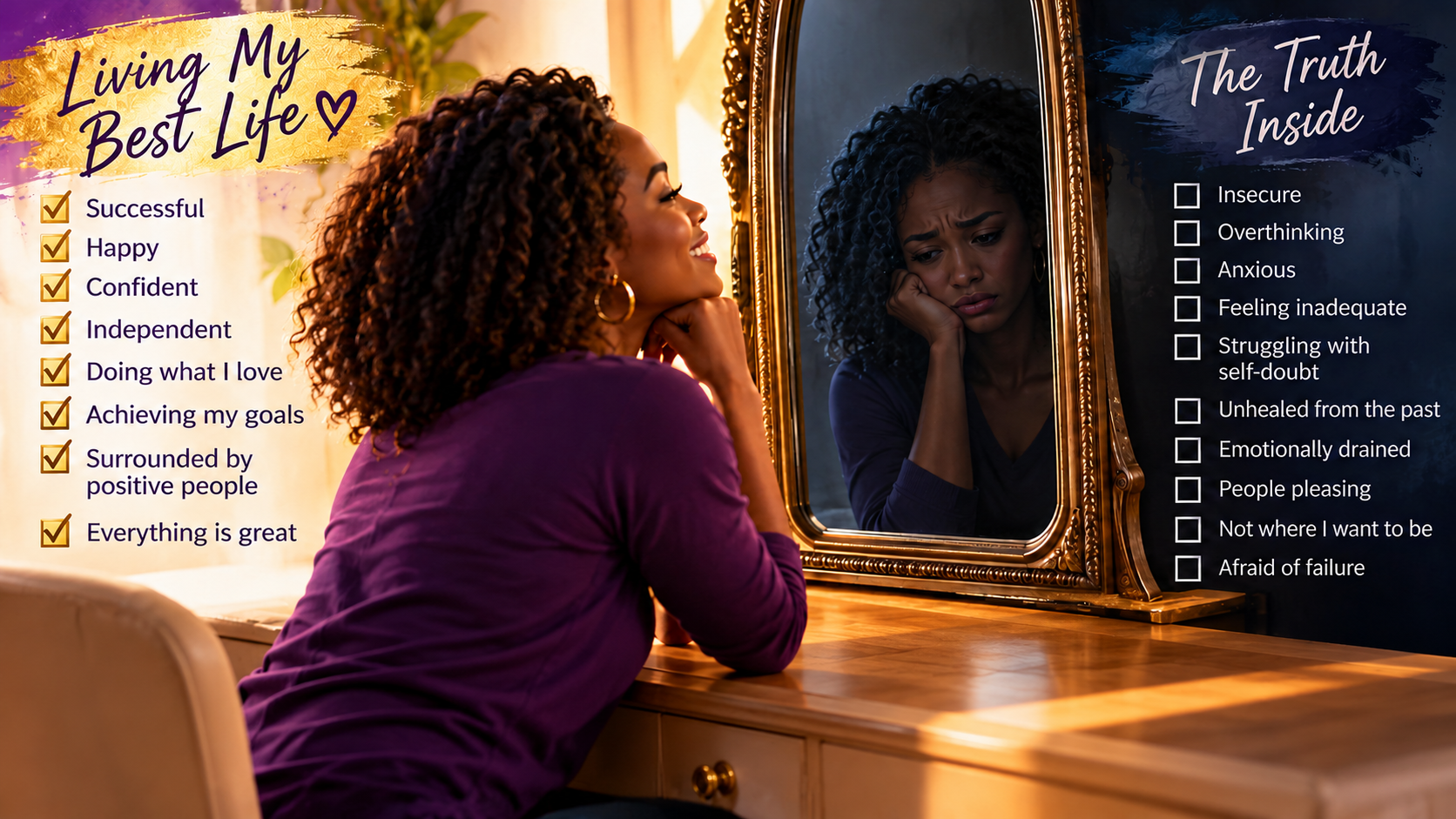
Is “living Your Best Life” lying to yourself about where you need to grow? vlog link.
We live in a culture that encourages us to “live our best life,” embrace who we are, and love ourselves just the way we are. While there is value in self-love and accepting yourself, there is also a danger in becoming so focused on validating ourselves that we stop challenging ourselves to grow.
So, what does it really mean to live a healthy, intentional life? In my personal experience, especially as a Christian, I've learned two important components of a healthier life: slowing down and being honest with yourself about who you are. Both require intention, humility, and a willingness to look beyond the surface.
Slow Down and Make Room for What Matters
Life has become increasingly busy. Between work, family, technology, responsibilities, and the constant demands of everyday living, it is easy to get caught up in a cycle of doing one thing after another. Sometimes, we get so busy that we forget to pray, reflect, spend time with loved ones, or even check in with ourselves. We may have good intentions, but our schedules don't always reflect what we say is important to us. The problem isn't necessarily that we have too much to do. Sometimes, it's that we haven't made enough room for the things that matter most.
Slowing down gives us the opportunity to be more intentional about how we live. It allows us to reflect on our decisions, recognize our needs, strengthen our relationships, and reconnect with God. This doesn't mean we should make ourselves available to everyone at all times or exhaust ourselves trying to meet every need around us. Balance is important. Even Jesus took time away from others to be alone. The goal is not to do less simply for the sake of doing less. The goal is to make room for what deserves our attention.
Are you so busy that you have neglected your relationships or your own needs? Are you moving so quickly through life that you rarely stop to consider whether you are heading in the right direction?
Be Honest With Yourself About Who You Are
One of the biggest drawbacks of not slowing down is not getting to know yourself. Not just what you like, but what you don’t. The stuff that needs to change. The places you need to heal.
Today's culture often promotes messages such as “I'm living my best life,” “I'm good just the way I am,” and “This is my truth.” Although self-acceptance has its place, these ideas can become problematic when people use them to avoid accountability or justify behavior that needs to change. There is a difference between accepting yourself and convincing yourself that you have nothing to work on. You can love yourself and still acknowledge that you have unhealthy habits. You can recognize your strengths while admitting that you have hurt someone. You can appreciate how far you've come and still recognize that you have more growing to do.
But that kind of honesty requires humility.
It means being willing to sit with yourself and say: I shouldn't have spoken to that person the way I did. I need to stop repeating a behavior that continues to hurt me. I could have helped someone, but I chose not to. I need to take responsibility for my actions instead of making excuses. There are things about myself that I need to change. These realizations may be uncomfortable, but discomfort isn't always bad. Sometimes, it is the beginning of meaningful growth.
You cannot work on a problem you refuse to acknowledge. And you cannot change a behavior you keep justifying.
Growth begins when you stop focusing exclusively on who you want to believe you are and become willing to examine who you actually are.
Self-Love Should Not Replace Self-Reflection
Self-love and recognizing your worth are important. Self-care, which boils down to taking care of your mental and emotional well-being, matters too. However, self-love should not become a reason to avoid personal responsibility.
If our only goal is to feel good about ourselves, we may start rejecting anything that challenges our self-image. Instead of examining constructive criticism, we dismiss it. Instead of acknowledging our mistakes, we make excuses. Instead of working through unhealthy patterns, we convince ourselves that everyone else simply needs to accept us. But how can we grow if we refuse to question ourselves?
Real self-reflection requires us to look beyond our intentions and consider the impact of our actions. It asks us to examine our beliefs, habits, attitudes, and the ways we treat other people, which for most is a big indicator of where your biggest changes need to happen. For example, you may believe you are a good friend, but are you present when your friends need you? You may believe you are a loving partner, but are you willing to listen, compromise, and take accountability when you are wrong?
The point isn't to tear yourself down or convince yourself you are a bad person. The point is to recognize that being a good person does not mean you are incapable of doing harmful things. You can acknowledge your flaws without allowing them to define you. In fact, recognizing where you need to grow is one of the most constructive, bravest, and loving things you can do for yourself.
What Does This Have to Do With Christianity?
When I consider what it means to live a Christian life, I believe the principles of slowing down and being honest with yourself are paramount.
Being a Christian does not mean you have everything figured out or that you always make the right decisions. I once thought being a Christian meant having your life together and consistently meeting a certain standard of behavior. When I recognized that I wasn't meeting that standard, I struggled unnecessarily for years, thinking I was doing something wrong and, in some ways, being punished.
However, since then, I’ve learned that what God wants from us is growth, not perfection, and that spiritual growth isn’t about pretending to be perfect. It is about recognizing your shortcomings and continuing to seek God's guidance as you work through them. With ample Scripture about renewing our minds and examining ourselves, it’s clear that God calls us to look beyond our immediate desires and consider whether our thoughts, attitudes, and actions align with “our best life,” or simply a healthy, fruitful lifestyle.
So while slowing down gives us time to pray, reflect, and make room for God's guidance, humility helps us acknowledge where we fall short and recognize where we need change. Even for those who don’t believe in the Christian faith, the call to live intentionally, reflect honestly, and take responsibility for your personal growth is undeniable and still beneficial.
Investing in Yourself Is Never a Waste
Many people, and I, in certain seasons of my life, think we can’t slow down or take better care of ourselves. We think so much is on our shoulders, so many people depend on us, and so much needs to be done that if we stop, catastrophic consequences await. And while this may be true in some cases, I think it's sad that we are so quick to invest time and energy in careers, families, relationships, education, and financial goals, yet neglect ourselves.
You can devote years to a job and still find yourself unexpectedly unemployed. You can pour your heart into a relationship that eventually ends. You can give your children everything you have, only to discover that their choices are ultimately their own. But investing in your growth, healing, and self-understanding is never a waste, and the benefits are priceless.
Personal growth doesn't guarantee life will go the way you want. However, it can drastically improve your quality of life and help you see that life's true value has nothing to do with your achievements or what you can buy.
Final Thoughts: Slow Down, Look Within, and Grow
If you want a healthier life, one marked by greater peace, stronger relationships, and meaningful transformation, start by slowing down and being honest with yourself. Make time to reflect. Make time for the people who matter. Make time to understand your own thoughts, needs, and behaviors. And when you recognize something that needs to change, resist the temptation to make excuses. You do not have to hate yourself to improve yourself. You do not have to deny your worth to acknowledge your flaws. And you do not have to pretend to be perfect to pursue a life of faith.
The goal isn't to convince yourself you are already everything you need to be. The goal is to become willing to grow into the person you have the potential to be.
So, I will leave you with two questions:
Are you living so fast that you have stopped making time for what matters most? And are you so committed to the person you believe yourself to be that you are unwilling to acknowledge the person you actually are?
Your answers may reveal more about your life than you expect.
Remember, growth, healing, and transformation begin with a willingness to look within.
— Stephanie K. (Sage the Coach)
